Why Buy Pre-loved? Trying Second Hand First
This post may contain Affiliate Links
One thing I am very passionate about is buying second-hand.
Most of the clothes and toys I buy are preloved and I also try to buy other things such as furniture second hand too.
In this post, I take a look at some of the main benefits of buying preloved.
Why Buy Pre-loved?
There are many reasons to buy pre-loved.
I always try to shop preloved first, especially for things like clothes, children’s books toys and furniture.
Of course, there are still times I do buy new, however, this is usually when I haven’t been successful in finding something second-hand.
1. Buying Pre-loved Saves Money
First up, buying pre-loved will almost definitely save you money, as second-hand clothes typically cost around 80% less than buying new.
My favourite way to shop second-hand is by buying bundles of clothes from Vinted (which helps to reduce the postage costs) clothes or scouring charity shops for bargains.
I am also lucky to have a dedicated second-hand kids clothing shop in my local town centre where many clothes are priced at £1 or £2.
Buying seasonal items second-hand is a huge win as these are often only worn for short periods of time so most people don’t want to spend loads.
Seasonal Items To Consider Buying Second Hand:
- Christmas Jumpers
- Christmas PJs
- Halloween Costumes
- Children In Need Items (Tshirts, Ears, etc)
- World Book Day Costumes
2. Buying Pre-loved Is Better For The Environment
Globally, the equivalent of a rubbish truck full of clothes ends up in a landfill every second.
Buying pre-loved helps prevent perfectly usable items of clothing from being dumped and is a great way to live more sustainably.
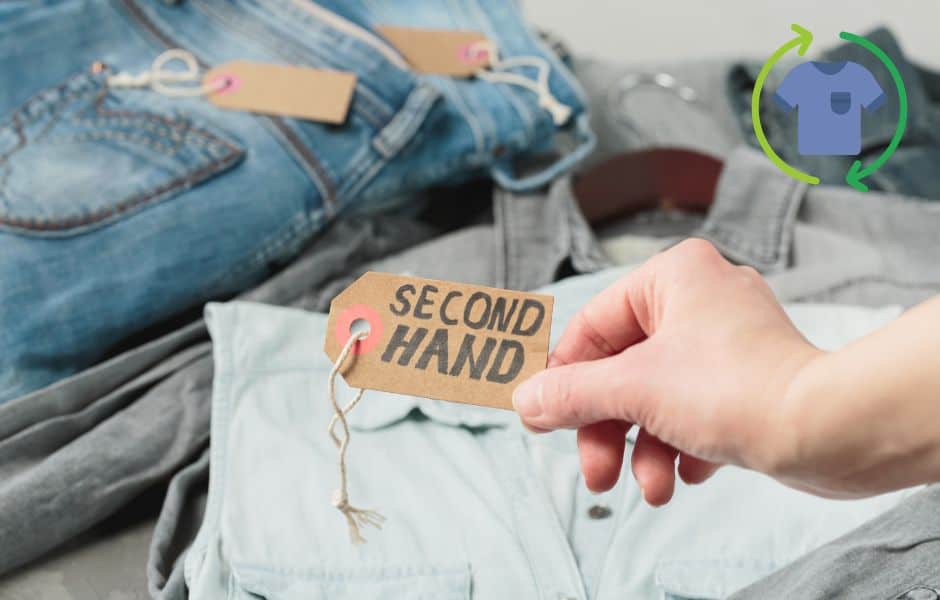
3. Buying Pre-Loved Can Benefit Charities
When you buy pre-loved clothing from a charity shop, you’re helping to raise money for a worthy cause, rather than making the CEO of a huge company make more money.
And while this doesn’t stop exploitation in the process of the clothes being made, it does at least stop it from going to waste.
4. Buying Preloved Means I Can Afford To Buy Better
Everyone will have noticed the rise in the cost of clothing as well as pretty much everything else we need to buy.
Buying cheap clothes is often necessary, but cheap clothing is often poorly made, wrongly sized and doesn’t last.
Buying preloved is cheaper, meaning that you might be able to buy better quality clothing which in turn should wash better and last longer, which then saves even more money long term.
5. Buying Pre-Loved Supports Other Families
When you use sites like Vinted and eBay to purchase second-hand clothing, you’re helping other families side hustle extra cash to buy the things they need.
I would much rather do this than then buy new, which is one of the reasons I do always try to buy second-hand before I buy new.
What Is Second Hand First?
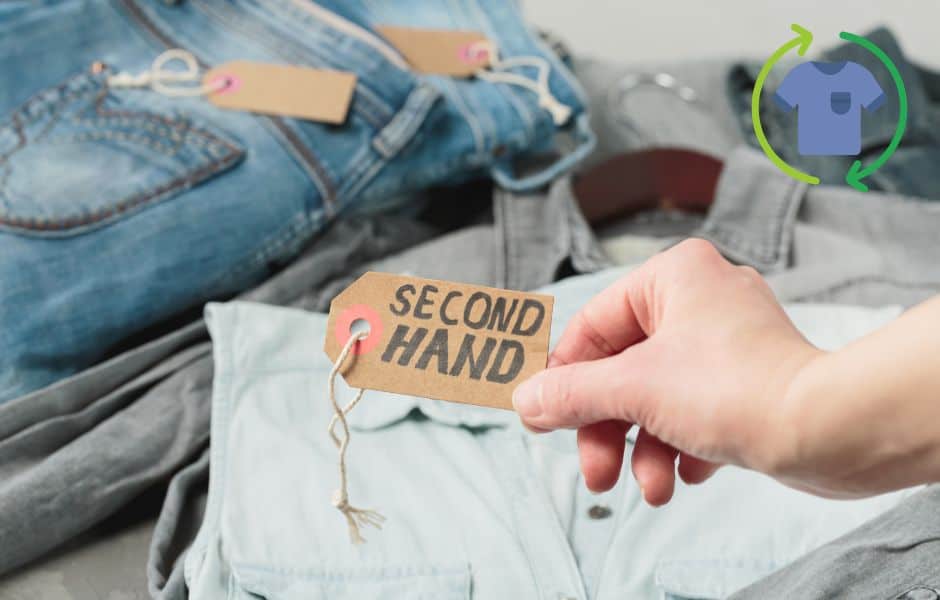
Second hand first is the practice of aiming to buy pre-loved rather than shopping new.
Shopping second-hand for the majority of items for your home and closet can take some getting used to.
For example, when you shop at second-hand stores, there isn’t always the biggest choice in sizes or styles so it can be harder if you’re looking for something specific.
Shopping on apps such as Vinted does give a much bigger pool of items to choose from, but then there are additional costs such as postage to consider.
One thing I would say is that you need to be organised and plan – the very occasional times when I do end up buying new are when I’ve left things to the last minute and then can’t find what I need second-hand.
Even when you can’t buy pre-loved there is no shame in buying, however, there are a few things I like to do to help maximise the life of my clothing purchases:
Wash Less Often
Most of our clothes are washed far too often and this can mean they don’t last as long.
For example, jeans only need washing every two or three wears unless they are visibly dirty.
Always follow the care instructions to avoid any mishaps such as shrinkage.
Make Do And Mend
Part of the problem with fast fashion is that when our clothes are cheap, we are less like to repair them.
Repairing clothes rather than buying new ones is a great way to increase sustainability and possibly learn a new skill at the same time.
Reuse, Resell or Donate
As clothes ending up in landfills is a huge problem, I try my best to ensure clothes are used until they really can’t be used anymore.
This means a combination of donating items in good condition, reselling items that still have tags or that are like new and reusing old and tatty clothes as rags for cleaning.
Limit Seasonal Purchases
Limiting seasonal purchases to pre-loved only really helps to reduce the impact on the environment of clothes that might only be worn once or twice such as Halloween costumes or super-sequined jackets for the works Christmas party.
Try to wear Christmas pyjamas and jumpers throughout December rather than just over the main days of festivities.
Do you like to buy pre-loved clothing? I’d love to hear about it in the comments!