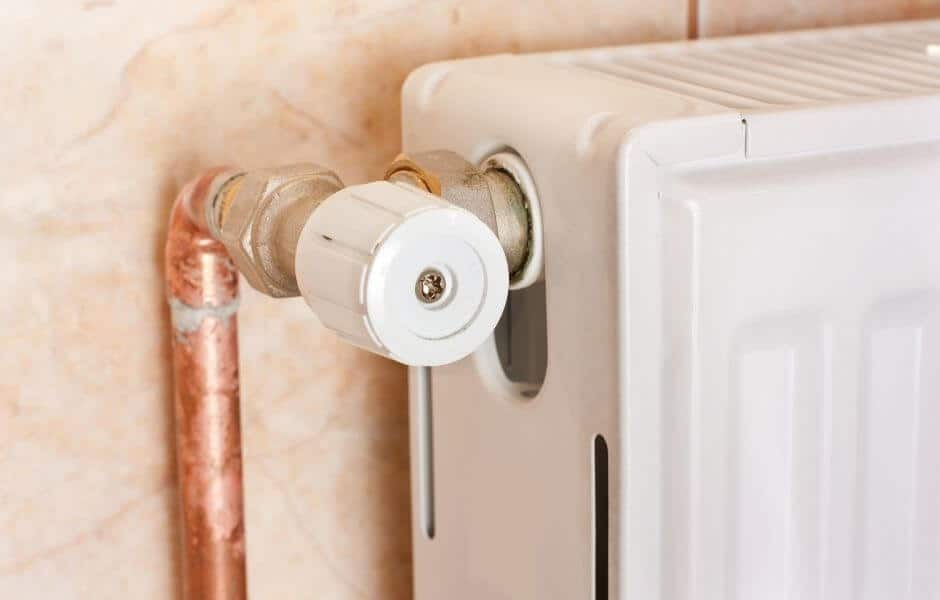
How To Get More Heat From Radiators
This post may contain Affiliate Links
With energy prices currently soaring, you may be looking for ways to maximise the heat in your home when your heating is actually on. This post takes a look at a few ways you can get more heat from radiators.
Just like many others, I’m pretty scared about the amount energy prices are increasing at the moment.
And those prices are set to rise at least twice more in the next year – first when the current price cap ends in April and then again when the second price cap ends in October.
I wanted to take a look at some of the ways in which you can get more heat from radiators during the times that they are switched on.
How To Get More Heat From Radiators
1. Move Your Furniture
One of the best ways to make sure your radiators are giving out as much heat as possible is to ensure there is no furniture blocking them.
Of course, depending on the size of your house, this may be easier said than done. Sat here thinking about my home there are at least two radiators blocked by tables.
If you can’t permanently move furniture around, you could consider moving it temporarily, just while your house warms up. For example, if you’re at work all day and the heating is set to come on at 6pm, move furniture out the way for an hour while the house warms up and then move it back again.
2. Add Radiator Reflectors
The walls behind radiators can end up absorbing a lot of heat, especially if they are placed on an exterior wall. Reflect that heat back into your rooms by adding radiator reflectors behind your radiators.
These can be bought from places like Screw Fix or you can make your own using cardboard and tinfoil if you don’t want to spend any money.
Here is my quick radiator reflector tutorial.
Reflecting that extra heat back into your home should mean lowers bills – you may be able to reduce your heating temperature by one or two degrees and it should reduce the amount of time your heating needs to be on too.
Related Posts:
Coupon Shop: 12 Boxes of Cereal for £4.80+ Free Bananas
3. Get More Heat From Radiators: Bleed Your Radiators Twice A Year
Regularly bleeding your radiators should ensure they are kicking out as much heat as they possibly be can. Sometimes air can get trapped in radiators, meaning they’ll be hot at the top but cold at the bottom which is a waste of energy.
Bleeding your radiators fixes this problem and is a job you should be able to perform yourself without any problems. If it’s your first time attempting it, you may want to ask a friend or relative to help or watch a few Youtube tutorials first.
Bleeding radiators is recommended twice a year, but if you can’t manage it that often, I would say always try and do it before you put your heating back on for the colder winter months.
4. Keep Your Radiators Clean
The build-up of dust within radiators can actually reduce performance, so keeping them clean is the key to ensuring they are pumping out as much heat as possible.
Radiators often fill with dust, as they cause the air around them to warm and as that warm air rises, so do dust particles.
Cleaning radiators can be tricky, so I recommend using a long thin duster and adding them to your weekly cleaning routine, even in the summer, to help avoid a large build-up.
You can also use a damp cloth and vacuum cleaner to help get your radiator clean. Dusting the skirting boards beneath your radiators can also help.
5. Check For Sludge Build Up
This is an issue that can occur with fancier radiators, the sort you might have in a luxury bathroom or as a space saver in a kitchen although it does happen in normal radiators too.
This sludge is a build-up of dirt and rust inside the radiator which stops hot water from circulating properly.
To check for this issue, carefully touch your radiator while it is hot (being careful not to burn yourself!) and if you find any cold spots, that could indicate sludge.
While this is something you can tackle yourself, it’s a more difficult job than a basic radiator bleed so it might be time to get the professionals in to fix it.
Doing all of the above should ensure your radiators are heating your home to their full capacity and in turn reducing your energy bills.



One thing you missed. Adding the correct additive to your radiator system prevents sludge buildup from rust. for example products like Fernox, sentinel x400 and Adey MC3 will stop rust. Even washing up liquid helps prevent rust. You need to create some space in the radiators by draining the system a little, to allow space for the additive, this may be found at the end of the run. Turn off the water supply to the system, then open a drain-down tap and tap off about a litre of fluid, Close the tap. and select a radiator at the highest point and open the vent with a key, using a funnel pour in the additive till it is filled. Close the vent. Then turn on your water supply to the system and run for an hour to distribute the additive.
Thanks for your helpful comment 🙂