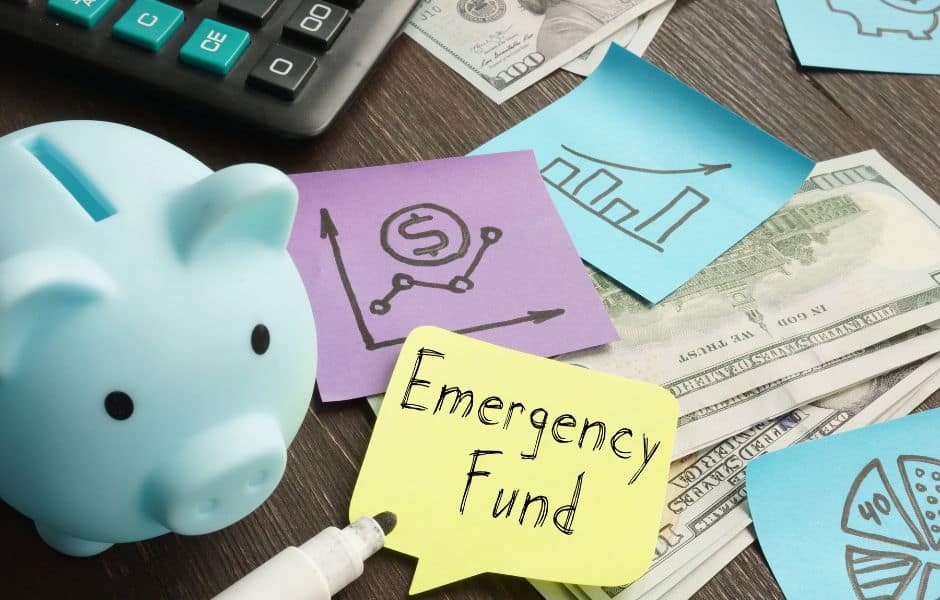
How to Build an Emergency Fund
This post may contain Affiliate Links
Do you have an Emergency Fund? Or Emergency money? One in four families in the UK has less than £100 saved and that needs to change. . .
In this Guest Post, Francesa from The Money Fox talks about why emergency money in the form of an emergency fund is a necessity for financial security and how you can start building yours – even if you don’t think you have any spare cash.
Make sure you check out her blog for advice on debt, making extra cash and saving money too.
Over to Francesca. . .
How To Build An Emergency Fund
Most people tend to think that they are doing well with their finances, that is until they are not. Emergencies pop up throughout life, and if you are not prepared financially to deal with these, it could lead to a lot of stress and unnecessary debt.
An emergency fund is quite simply, a fund for an emergency. I believe that it is an essential part of managing your finances that everyone should have just in case.
Anti-debt charity Step Change says that, if every household in the UK had £1,000 saved, it would reduce the number falling into problem debt by half a million.
An emergency fund isn’t there to dip into whenever you spot something that you would quite like to buy – it should rarely be touched.
If you think that you would be tempted into dipping into it for other things, make sure you set up separate accounts for things that you will want to spend your money on.
I’ve learnt through my studying at Uni that we human beings find it quite hard to look into the future.
There have been studies that show that people would rather have money straight away, even if they know that they could have lots more further down the line.
This is the same for emergency funds and any savings really – if you have it stored somewhere with high interest rates, it will grow bigger over time.
Why Should I Have An Emergency Fund?
Picture this – you lose your job. No warning, or maybe you have to take a lot of sick leave. When this happens, your car breaks down. And then your washing machine. They say that bad luck comes in threes! Typically, when you have no spare income, things will probably start to break on you. It’s rarely just one problem either, and these can quickly escalate and that’s why you need emergency money.
For your loved ones. Emergencies aren’t just limited to yourself – if a member of your family or friend has something bad happen, chances are that you will want to help and need funds on hand quickly.

If there’s something that is a good thing to avoid, it’s the feeling of stress and worry.
Imagine you have a real emergency come up, and instead of descending into panic and the feeling of dread, you breathe a sigh of relief knowing that you have money in your emergency fund that will cover it.
How Much Should I Save In An Emergency Fund?
There are varying amounts that are batted about, it could be anything that makes you feel comfortable though. A good amount would be a few months worth of expenses in case you lost your job – so the bare minimum that you would have to pay each month to get by.
Dave Ramsey, a US favourite for financial management, suggests that you create an emergency fund of $1000. I think that this is a good amount to start off with – I want to build up a £1000 emergency fund personally.
If you lost your job, an unfortunate effect of this can be you being unable to find another job for months. Hopefully, you will be able to get one straight away, but even if you do – it’s unlikely that they will pay you in the first month.
If you would like to save a lot of money quickly, bear in mind that this may not be possible. If you put too much money in your savings, you may find that you need it for something else and withdraw it – which is no good for reaching your goal.
Don’t set an unreasonable goal because you can run out of steam quickly and get de-motivated. It may be easier for you to break down your goal into chunks – say £10 a week. That’s much easier than looking at your £1000 or whichever amount you’ve chosen. However, don’t set the amount too low!
How Can I Build Up My Emergency Fund?
First off, you should create a budget. I am a huge fan of budgeting, even though it usually meets a lot of resistance whenever you mention it to people. I think it stems from when you hear people say “Sorry, I can’t do that, because I’m on a tight budget” – now a tight budget is not the same as a budget!
When creating your budget, the first step is to list all of your expenses. If you are unsure what these are, the easiest thing to do is to check your internet banking as it will list all of your direct debits and the dates that they come out. You can also go back through your internet banking or bank statements to see what you spend on variable expenses – such as food shopping.
Studies have shown that when people try and guess how much they spend on things, they are usually way off the mark!
Ways that you can reduce your expenses could be:
- Mortgage/Rent – could you see if you could get a lower interest rate on your mortgage? This could save you thousands over time, and it won’t take you long to check.
- With rent, see if you could get it lowered with your landlord (look at similar properties in the area), but if they aren’t budging, would moving somewhere cheaper be viable for you? This would save you a lot of money that you could use for things other than your emergency fund as well!
- Insurances (life, car, house etc) – look on price comparison sites to see if you can get your insurance any cheaper. Make sure that you don’t just auto-renew as they will bump up the price.
- Use the car less. Could you lift share with someone when you go to work, or other places such as when you go food shopping? Use your bike or walk to travel short distances. Petrol is expensive, and you can easily save money each month just by doing fewer trips.
- Check your direct debits. Are you paying for things that you aren’t using? A classic is a gym membership, but there could be things in there such as big TV packages that you aren’t using, or old insurances.
- Try and reduce your food shopping. Groceries are a variable expense, and if you ask people what they spend, it varies massively from person to person and could be wasting you hundreds each month. Yes, hundreds! Some ways that you reduce your food bill easily are: meal planning, shopping your cupboard, checking what you have in your fridge/cupboards before you shop, plan when you are going to go shopping e.g. bi-weekly or monthly, freeze your food, make homemade snacks, have meatless meals, stretch your meat with oats or veg, and many more!
Once you have listed all of your expenses (don’t forget things like birthdays, insurance that you pay annually etc), list all of your income. Your income minus your expenses are how much you are able to save! Lots of personal finance bloggers recommend saving money first, but I recommend to get your essential expenses as low as possible, and then you can see how much you have left to save/live on.
If you don’t have a lot of money left after doing your income minus expenses, you may want to think about earning some extra money on the side. You could get an additional job in the evenings or weekends, or do some things on the side such as dog sitting or mystery shopping.
Do you have a fund of emergency money? How much is in yours?
You can also find Francesca on Facebook, Twitter and Instagram.