
Reselling: Is It Unethical To Buy From Charity Shops?
This post may contain Affiliate Links
This month I’m taking part in #SecondhandSeptember which focuses on encouraging people not to buy any new clothes for 30 days and instead buy them second hand from charity shops, eBay, Facebook and many of the other second-hand websites out there.
This post is a little different however, as I am going to be looking at whether it’s ok to buy from charity shops to sell on for a profit, also known as reselling.
Is reselling unethical? Let’s take a look.
Sometimes I think reselling gets a bit of a bad rep. Buying items from, for example, Poundland and then selling them on for a lot more on eBay. People seem to be utterly horrified by this and the individuals buying selling the items are often branded as ‘cheeky’ or ‘disgusting’.
So, is it even worse then, when then these resellers buy and sell from charity shops?
Are they harming the Charity Shop profits, and in turn hindering the charities efforts by buying items they know they can sell on for more money?
Is it wrong, buying from charity shops and selling on eBay?
Reselling: Is It Unethical To Buy From Charity Shops?
Charity Shop Prices VS eBay Prices
Firstly, the Charity Shop sets its own prices. Many volunteers have worked in charity shops for years and will know how much they can get for each item and what it’s likely to sell for. Yes, it may well sell for more on eBay, but a small town charity shop doesn’t have the type or size of audience that eBay does.
Some charity shops are pretty savvy too – they will know if there are branded or new items they can charge more for and if they find something really special they may choose to sell it privately or auction it to get the best profit that they can.
Some will also send items to charity shops in more affluent areas as they know they’ll get more money for them there. Charity shops definitely know what they are doing when it comes to this and they want to get as much money in the till as the possibly can.
Charity shops with eBay stores
Cancer Research U.K, Sense, and British Heart Foundation all have their own eBay stores if you want to take a look.
Reselling isn’t as easy as you might think
Reselling for a profit actually takes quite a bit of effort. Selling charity shop items on eBay, for example, can take quite a bit of trial error before you begin to make a profit.
It takes research and learning what items will actually sell.
When you then factor in the time spent sourcing items, eBay and Paypal both taking fees, trips to the post office and finally Tax and National insurance, resellers may not be making the huge profits you think they are.
Oh, then there’s the photographing, packaging and listing on eBay too. It’s a lot of work.
Resellers encourage stock rotation
Charity shops are often inundated with donations, especially of clothes, so resellers buying lots of items is actually a good thing.
It means the charity shop has less stock being stored and can turn around more items, meaning shoppers have more choice as stock is more frequently rotated.
In turn, this means charity shops make more sales and then there is more money going to charity.
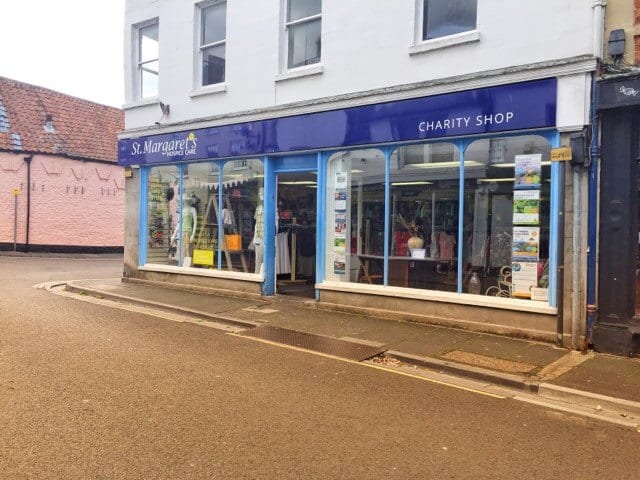
There is a charity shop in my home town that puts out 230 new second-hand items each day. I love this and it really encourages me to pop in each time I walk past.
This would be the same for resellers, they would pop in knowing there would be new items for them to look at and in turn the charity is continually making sales. The reseller would then make money reselling clothes. It’s win-win.
When charities are unable to shift stock they usually sell it on in bulk for as little as 50p for 5kg of clothing. While this means they are still making money, it’s less than ideal.
Resellers pay the same as everyone and as long as they are not constantly trying to haggle down the prices, once the charity has the money, the customer should be able to what they like with the items they have bought.
Working From Home
Resellers are often reselling to make much needed extra cash for their family or as a job they can do around children without having to fork out for childcare.
Some resellers may well spend thousands of pounds each year in charity shops – imagine if they all stopped doing that? Charites would be much worse off for it and in turn, wouldn’t be able to help or support as many people.
People making money from charity shops isn’t a bad thing.
Charity Shop Reselling Supports Charities
There is an argument that people donate to certain charities because they specifically want to support that charity and they wouldn’t want their items being sold on for a profit afterwards.
But it’s really not up to the person donating what happens to their items – if they are that concerned they either shouldn’t be donating or could donate directly to somewhere that helps people, such as a women’s refuge.
As long as the charity is getting the money they asked for, that’s all that matters.
I’ve also seen the argument that resellers are stopping those in need being able to buy cheaply from charity shops.
Personally, I just can’t see how this is true. There are just so many charity shops, mostly full to the brim with clothes, I find it hard to believe people are missing out due to resellers buying items.
Resellers are also more likely to buy more expensive and branded items that someone on a very tight budget might not be able to afford to begin with.
All in all, I think resellers are great for charity shops and there is nothing wrong with buying second-hand and selling on for a profit.
Disclaimer: If you’re earning more than £100o net per year from your side hustle (excluding matched betting, cashback and selling your own items) then you’ll need to register with HMRC and fill out a tax return. This includes buying items from charity shops or Vinted to resell for a profit.



I’m with you on this. I live in a town that is quite run down, and has a fair few charity shops. It’s well known that people come from out of town specifically to buy from the charity shops with intention to resell in more affluent areas, or on eBay. Without those buyers, the charity shops would probably find it hard to sell as many items and would then have to resort to selling in bulk at very low prices.