Will Climate Change Imapct Traditional Summer Holidays?
This post may contain Affiliate Links
This is a collaborative post
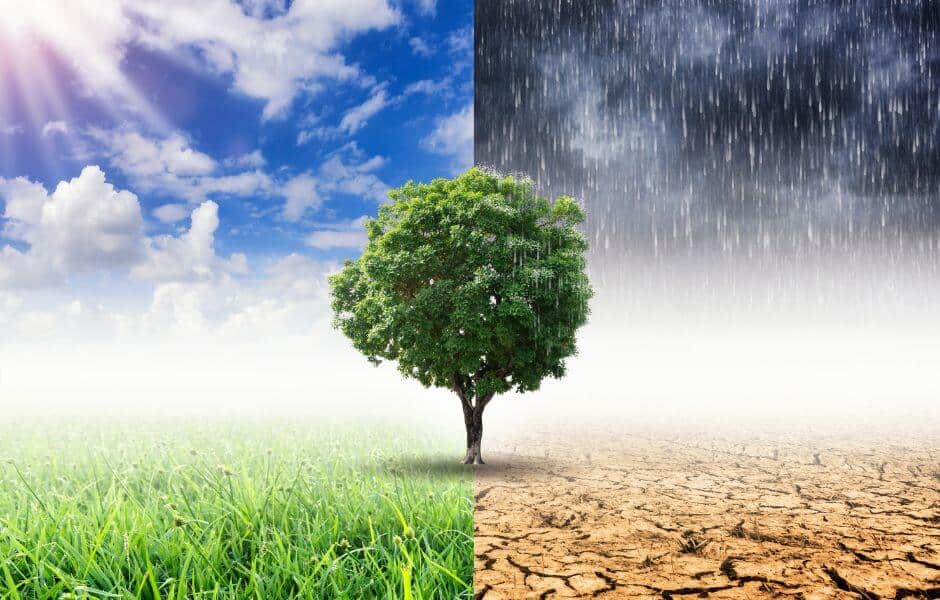
Heatwaves, torrential rain, forest fires… Is climate change making an impact on our traditional summer holidays? It certainly looks like it at the moment.
The growing severity of weather events as Europe warms up may influence your destination selection from now on.
The weather is a major factor in determining how much fun you have on holiday. While many people crave sunshine, there is a limit to how scorching you can stand it. Especially if heavy downpours, floods, or flames accompany the high temperatures.
Travellers may experience delays this summer and in future summers as a result of the increasing frequency of extreme weather and unexpected conditions in Europe brought on by climate change.
Could extreme weather affect air travel?
Tourist hotspots in Europe often experience high temperatures, and in certain cases, it may be too hot to fly there. When the air around an airplane gets too hot, it expands and loses density, making takeoff more difficult.
In order to capture enough power for liftoff, planes require a specific density of air. Extreme heat is still quite unusual, but as the planet warms, it may become the norm.
As climate change delivers hotter weather, aviation authorities are already warning that travelers may be trapped with delays and cancellations. A rise in the frequency of extremely hot days may lead to the suspension of flights, the closure of some runways, and the reduction of baggage limits.
Where in Europe will be hit by extreme weather this year?
This year, El Niño might cause global temperatures to soar to new heights. The abnormal warming of the Pacific Ocean’s waters has caused an increase in the frequency and severity of extreme weather events.
Already, experts are predicting that this year will be even hotter than 2022, ranking in the top five or six hottest years ever recorded.
Temperatures in Spain, France, and Italy will be significantly above average between June and August of this year.
The worst of the heat is expected to hit southern and western Europe, the report says. However, the seasonal projection also indicates that southern Europe will have above-average rainfall all summer long. The chronic drought conditions in these places are not likely to be alleviated by these showers.
The Christmas season in the Mediterranean may see more extreme weather due to this phenomenon. Also French authorities have issued a rare early season forest fire alert due to the unusually high temperatures. Water consumption limits may be in place for tourists visiting parts of southern Europe this year, as forecasted rainfall is unlikely to ease the region’s drought.
Could some destinations become too hot for holidaymakers?
While warm weather and sunshine may be a draw for vacationers, they are learning to recognise when the temperature becomes unbearable.
Destinations that may be already causing concern are Spain, Greece, Turkey and Cyprus.
By 2100, popular holiday destinations across Europe could face the risk of more unprecedented record-breaking heat waves according to a recent study carried out by the University of Bristol.
In April, another study warned that by 2050, Paris might experience summertime highs of over 50 degrees Celsius.
Obviously most of this is speculation at this point, but we can all see patterns emerging, that look like this will all be fact at a later date.
It is easy to feel as if there is nothing we can do as individuals to turn this situation around, but there may be small baby steps we can all take that can at least have a small impact…
Climate Friendly Travel
Did you know that transportation accounts for over a quarter of Europe’s total emissions and is the primary cause of air pollution in urban areas? Taking a train in Europe is one of the most environmentally friendly ways to travel.
Due to the widespread use of electrification, rail travel produces far fewer greenhouse gas emissions per passenger-kilometer than either air or road travel. The environmental benefits of train travel are bolstered by the fact that it eliminates the need to drive and thus reduces emissions and congestion.
In addition, many European rail lines include breathtaking vistas, such as those that wind through the Alpine valleys or along the seaside. Consider the trip itself an adventure this summer and take a train to your destination.
Eco-friendly Accommodation
Our sleeping arrangements have significant effects on the environment. Hotels and campgrounds may take very diverse approaches to environmental responsibility, so check their green credentials before making a reservation.
Another way to ensure they are serious about sustainability is to see whether they have an EU eco-label. Ask about the hotel’s use of energy-saving light bulbs and electronics before booking. Is it run on sustainable energy sources like solar cells?
Does it utilise reusable plates and silverware instead of disposable ones in its eateries? Are there any places to rent bicycles close by?
Pack Mindfully
With a little forethought, you can avoid bringing along any number of climate-unfriendly products on your next trip, from plastic bags and containers to bottles of shampoo. Why not bring your own water bottle instead of buying disposable ones?
This may not seem like a big deal, but in the EU, about 40% of plastic production is used for packaging, and nearly 25% of all plastic production is discarded as waste.
Reusable straws, plates, and forks, as well as eco-friendly products like natural shampoo bars, can be brought along for the ride. You may take it a step further by purchasing products like bamboo-made linen blouses or swimwear constructed from recycled plastic.
Finally, try to be ecologically conscious during your visit. Stay on designated trails to safeguard the area’s wildlife and plant life, and don’t waste water, especially in drought-prone places like the arid regions of Southern Spain.
If you spend the day at the beach or in the mountains, pack out all of your trash. Find out if there are eateries in the neighbourhood that employ sustainably sourced food in their dishes.
You can save the environment and get a taste of local cuisine at the same time. Do your best to be climate-friendly in your trip preparations without sacrificing the fun you’re hoping to have over the holiday.
In January, eight countries – Belarus, the Czech Republic, Denmark, Latvia, Liechtenstein, Lithuania, the Netherlands, and Poland – set new all-time seasonal heat records on the first day of the month.
France also broke more than 100 heat records that day. The unseasonably warm weather meant many famous European skiing destinations saw little to no snow, including parts of the Alps. Some were forced to rely entirely on artificial snow.
In April, Portugal and Spain baked in extreme heat with temperatures reaching between 36.9°C and 38.8°C in southern parts of each country. May saw this heat turn to downpours and flash flooding in Spain as some regions popular with tourists experienced their first rainfall in months.
Streets in Murcia became rivers, with buildings flooded and countless roads closed. Some parts of Valencia saw more rainfall in a few days than they had in the last six months, according to the national weather agency AEMET.
After a dry and disastrous ski season, Italy too was hit by deadly flooding in May. Six months’ worth of rain fell in 36 hours in the Emilia-Romagna region leaving at least 13 people dead, thousands evacuated from their homes and chaos on transport networks.